Grain on Monday.Dough on Tuesday.Nothing kept over.
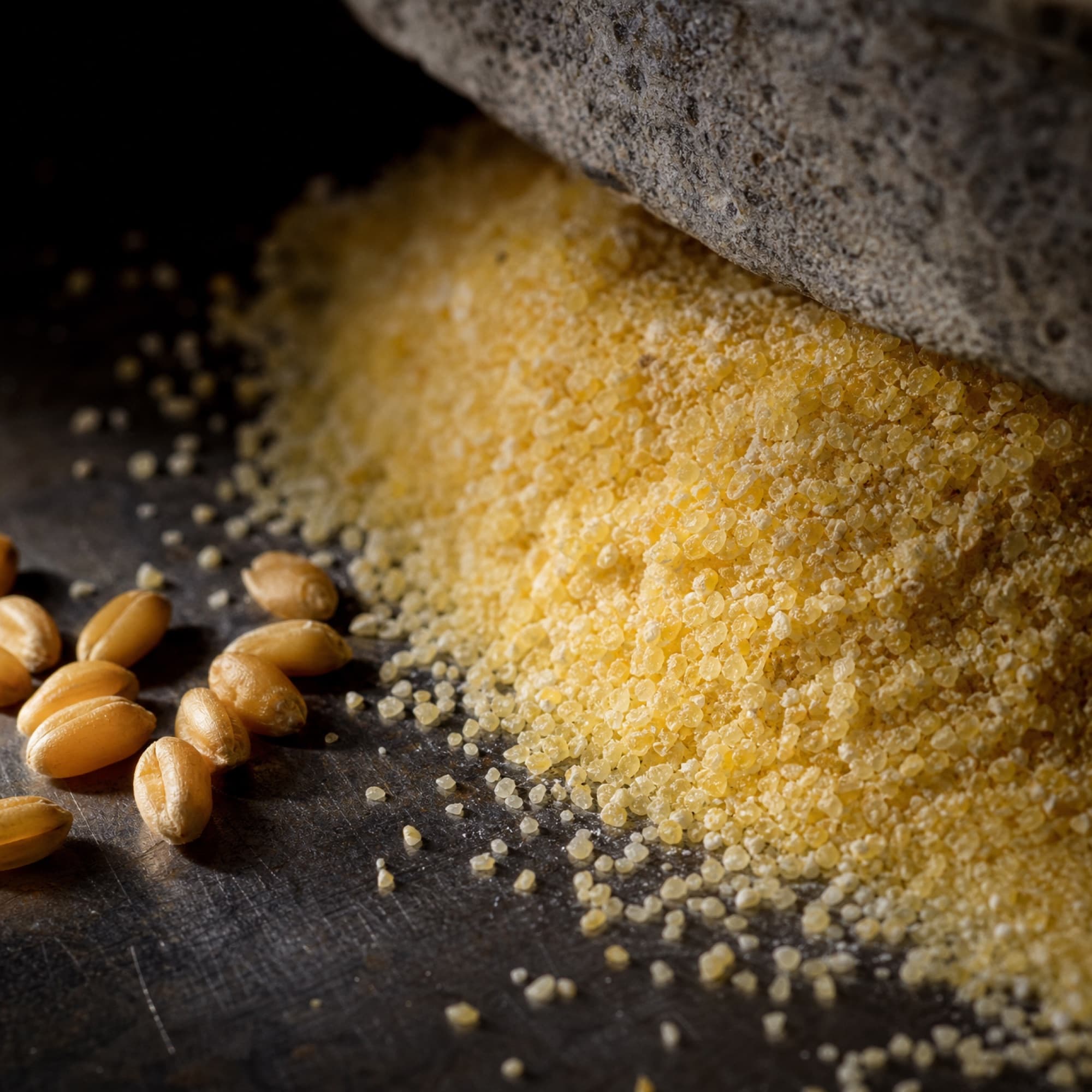
Semolina starts turning within three weeks of milling, and by week six the dough has a flatness you can taste but cannot name. So we buy the grain and not the flour, and the stone mill runs on the one day the room is dark.
What happens while nothing appears to happen.
Elapsed
00h
Hydration
0%
Nothing here is fermenting. There is no yeast in an egg dough. The rest is the semolina finishing the job of absorbing water, which takes two days and not the ten minutes a mixer implies.
Mill
Hour 0Whole durum berries into the stone mill. The semolina leaves it warm.
Hydrate
Hour 1Semolina, yolk and a little water. Mixed until it looks wrong, then left.
Rest
Hour 4Fourteen degrees, wrapped. The water finds the rest of the flour on its own.
Laminate
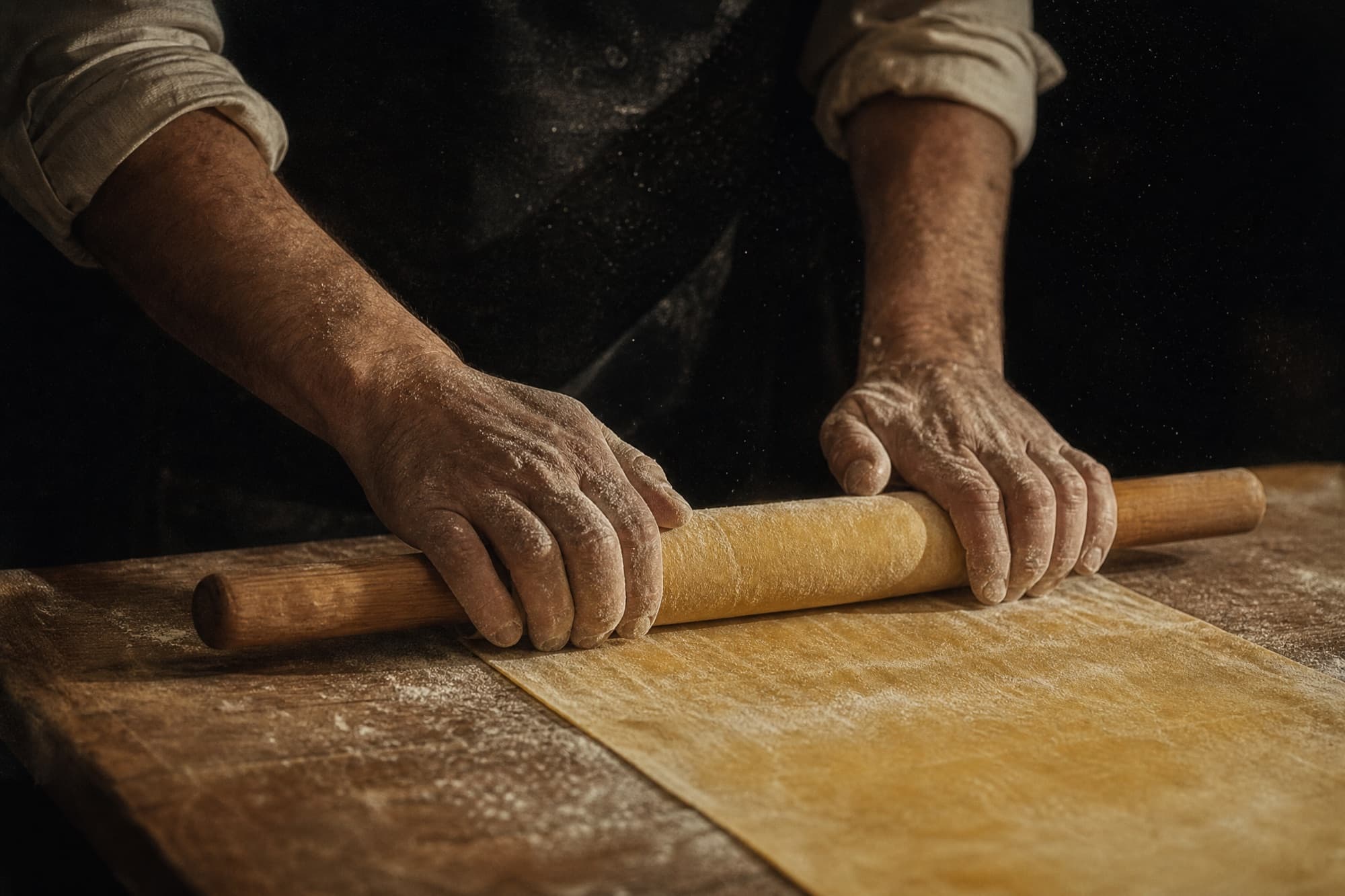
Hour 28Folded and rolled back on itself six times to line the gluten up.
Cut
Hour 47Down to the eighth notch, then hand cut on the board.
Pass
Hour 48Ninety seconds in salted water, then straight into the pan with the sauce.
The same sheet, finished six ways.
Tagliatelle
Rolled to the eighth notch, cut by hand on the board
0.9 mm
Pappardelle
Torn wide with a wheel so the edge stays ragged and holds sauce
1.1 mm
Garganelli
Ridged one at a time on a comb, around a dowel
1.0 mm
Cavatelli
Dragged with two thumbs, semolina only, no egg
3 mm
Agnolotti dal plin
Pinched shut, one pinch each, about four hundred a service
0.6 mm
Tonnarelli
Pressed through the guitar, square in section
2 mm